
Jaw Pain & Bite Relief
TMJ Treatment in La Habra, CA
Personalized solutions for jaw pain, tension, and temporomandibular joint disorders.
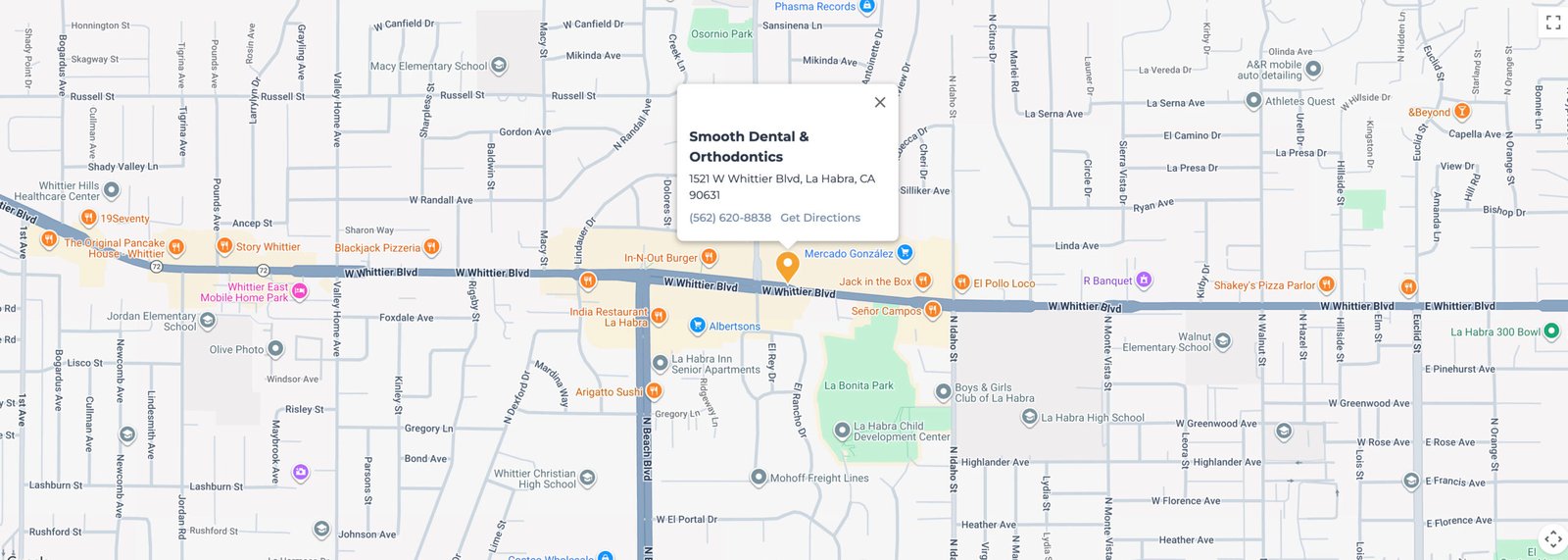
TMJ disorders affect the temporomandibular joint that connects your jaw to your skull, often causing pain, tension, and difficulty with everyday activities like chewing or speaking. At Smooth Dental & Orthodontics in La Habra, CA, we provide personalized TMJ treatment designed to relieve discomfort, improve jaw function, and support long-term oral health.

TMJ Treatment
Where Modern Dentistry Meets Comfortable Care
TMJ Treatment at Smooth Dental
Temporomandibular joint (TMJ) disorders can develop when the jaw joint or surrounding muscles become strained or misaligned. Symptoms may include jaw pain, clicking sounds, headaches, or difficulty opening and closing the mouth.
Our team evaluates each patient carefully to determine the underlying cause of TMJ symptoms. Treatment plans are tailored to reduce inflammation, relax jaw muscles, and improve jaw alignment so you can experience greater comfort and better function.
Common Symptoms of TMJ Disorders
- Chronic jaw pain Persistent discomfort in the jaw or facial muscles may indicate TMJ dysfunction.
- Clicking or popping sounds Audible noises when opening or closing the mouth may occur when the joint is misaligned.
- Limited jaw movement Difficulty opening the mouth fully or pain while chewing can signal TMJ issues.
Treatment Options for TMJ Disorders
TMJ treatment often begins with conservative approaches designed to reduce stress on the jaw joint and surrounding muscles. Depending on the severity of symptoms, multiple treatment strategies may be used to provide relief.
- Custom oral appliances Night guards or bite splints help reduce teeth grinding and relieve pressure on the jaw.
- Therapeutic exercises Jaw exercises and lifestyle adjustments may help improve muscle function and reduce tension.
- Advanced treatments In some cases, additional therapies such as bite adjustments or specialized procedures may be recommended.
What Causes TMJ Disorders?
TMJ disorders can develop due to a variety of factors affecting the jaw joint and surrounding muscles. Identifying the underlying cause is an important step in developing an effective treatment plan.
- Teeth grinding or clenching (bruxism)
- Jaw injury or trauma
- Bite misalignment or uneven tooth contact
- Arthritis affecting the jaw joint
- Stress-related muscle tension
How TMJ Disorders Are Diagnosed
Diagnosing TMJ disorders involves a thorough evaluation of jaw movement, muscle tenderness, and joint function. Our dental team may review your medical history, evaluate your bite, and assess how your jaw moves during normal activities like chewing and speaking.
In some cases, imaging such as dental X-rays or other diagnostic tools may be used to better understand the condition of the joint and surrounding structures.
Schedule a Consultation
If you are experiencing persistent jaw pain, headaches, or difficulty chewing, TMJ treatment may help restore comfort and improve your quality of life. Our dental team can evaluate your symptoms and recommend the most effective treatment options for your needs.
The short answer
TMJ treatment is care for disorders of the temporomandibular joint, which connects the jaw to the skull, when the joint or its muscles become strained or misaligned. After an evaluation of jaw movement, muscle tenderness, bite and sometimes imaging, treatment usually starts conservatively with night guards or bite splints, jaw exercises and lifestyle changes, with bite adjustments or other therapies if needed. It aims to relieve jaw pain and headaches and improve jaw function.
TMJ Treatment FAQ
- What is TMJ disorder?
- TMJ disorder refers to problems with the temporomandibular joint, which connects the jaw to the skull, and it can cause pain, stiffness, and difficulty moving the jaw. It can develop when the jaw joint or the surrounding muscles become strained or misaligned. Everyday activities like chewing or speaking may become uncomfortable. Treatment is tailored to the underlying cause.
- What symptoms are associated with TMJ disorders?
- Common TMJ symptoms include jaw pain, clicking or popping sounds, headaches, facial pain, ear discomfort, and difficulty opening or closing the mouth. Clicking or popping may happen when the joint is misaligned. Pain while chewing or trouble opening fully can also signal a TMJ issue. Persistent symptoms like these are a reason to have your jaw evaluated.
- Can teeth grinding cause TMJ problems?
- Yes, grinding or clenching the teeth puts excessive pressure on the jaw muscles and joints, which can contribute to TMJ disorders. Grinding, known as bruxism, is one of several common causes. Others include jaw injury, bite misalignment, arthritis, and stress-related muscle tension. A custom night guard can help reduce grinding and relieve pressure on the jaw.
- How is TMJ treated?
- TMJ treatment may include oral appliances, jaw exercises, lifestyle changes, bite adjustments, or other therapies designed to reduce strain on the jaw joint. Treatment usually begins with conservative approaches. Night guards or bite splints reduce grinding and relieve pressure. Depending on how severe the symptoms are, several strategies may be combined.
- Are TMJ treatments invasive?
- Many TMJ treatments begin with conservative, non-invasive approaches such as oral appliances and muscle relaxation techniques. Jaw exercises and lifestyle adjustments can also improve muscle function and reduce tension. These steps aim to reduce stress on the joint and its muscles. Additional therapies are considered only in some cases.
- Can TMJ disorders cause headaches?
- Yes, TMJ-related muscle tension and joint strain can contribute to tension headaches and facial pain. Headaches are one of the common symptoms of a TMJ disorder. Relieving strain on the jaw can help reduce them. Persistent headaches together with jaw pain are worth having evaluated.
- How is TMJ diagnosed?
- A dentist typically diagnoses a TMJ disorder through a physical exam, an evaluation of jaw movement, a review of symptoms, and sometimes diagnostic imaging. The exam checks muscle tenderness and joint function. Your bite and the way your jaw moves while chewing and speaking are also assessed. Dental X-rays or other tools may be used to better understand the joint.
- When should I seek TMJ treatment?
- Seek a dental evaluation if you have persistent jaw pain, limited jaw movement, clicking sounds, or frequent headaches. These can be signs of a TMJ disorder. An evaluation identifies the underlying cause of your symptoms. That is the first step toward a treatment plan that relieves discomfort.